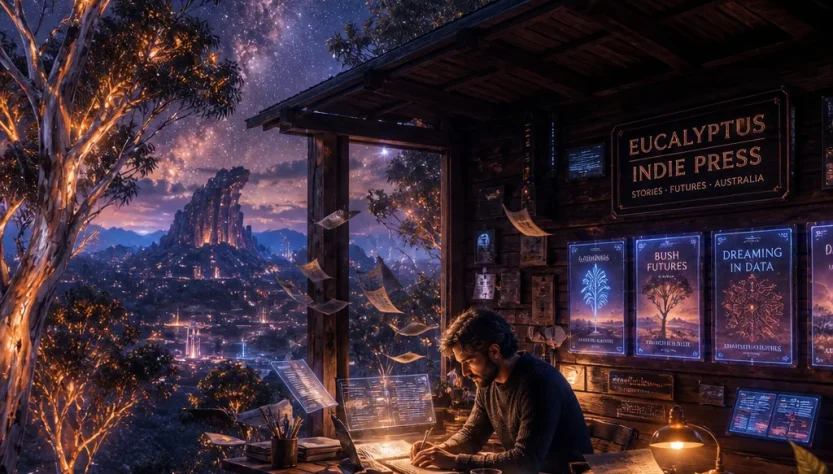
A Quiet Revolution Down Under
Australian speculative fiction has always possessed a fiercely independent spirit. For generations, local storytellers have explored the uncanny, weaving ghost stories, dystopian futures, high fantasy, and strange machinery. However, for decades, major publishing houses held a monopoly on what reached bookstore shelves, often passing on unconventional, high-risk manuscripts. That dynamic is shifting rapidly. Today, independent authors and boutique small presses represent a powerful force within the Australian literary ecosystem, championing strange, daring, and critically acclaimed works that mainstream houses frequently overlook. Readers are taking notice, shifting their loyalty to indie creators who offer unprecedented narrative originality.
Defining Australian Speculative Fiction
Speculative fiction functions as a broad umbrella term encompassing science fiction, fantasy, horror, weird fiction, slipstream, and magical realism. Australian writers have consistently embraced this stylistic freedom, blending colonial history with hard science fiction, or setting ancient mythological archetypes within modern suburban landscapes. These narratives frequently interrogate themes of climate change, geographical isolation, and vast distances, resulting in a distinctive voice unique to the continent. This uncompromising blend of local context and speculative imagination yields a literary output that stands apart on the global stage.
The Catalysts of Independent Publishing
Several technological and economic shifts converged to spark the indie publishing boom. High-resolution digital printing became economically viable, eliminating the financial barriers of short-run print jobs. E-commerce platforms allowed a reader in Darwin and another in Perth to purchase the exact same physical book on release day. Social media provided creators with a direct, unfiltered channel to their target audience, while professional editing and formatting tools empowered small teams to produce industry-standard volumes.
Simultaneously, a distinct demand-side pressure emerged. Over the past two decades, commercial publishers narrowed their acquisition lists, favoring risk-averse titles with guaranteed mass-market appeal. This left a massive void for readers craving daring, unconventional, and regionally grounded stories. Independent presses stepped into this space immediately. Unlike corporate monoliths, they do not require hundreds of thousands of sales to justify a title; instead, they thrive by cultivating a dedicated readership of a few hundred devoted enthusiasts.
Boutique Presses Driving the Movement
Australia boasts a proud legacy of micro-presses operated by passionate advocates of genre fiction. Often run from spare rooms, backyard sheds, or co-working studios, these publishers manage tight budgets and limited print runs while taking artistic risks that large publishing conglomerates cannot afford.
These presses frequently carve out specific niches. One publisher might focus exclusively on atmospheric horror novellas, while another champions Australian fantasy deeply rooted in Indigenous and colonial folklore. A third might spearhead experimental weird fiction that shatters traditional genre boundaries. Collectively, they curate a diverse, vibrant literary landscape. Readers can transition effortlessly from a quiet, haunting ghost story to a sprawling space opera in a single afternoon.
The individuals running these operations often shoulder multiple responsibilities—acting as editor, designer, publicist, and fulfillment manager simultaneously. This hands-on, lean business model minimizes overhead while preserving editorial integrity. Furthermore, it fosters an authentic, transparent connection between the press and its community of buyers.
Digital Infrastructure and Direct Sales
The advent of ebooks fundamentally transformed the financial mathematics for small publishers by eradicating warehousing fees, physical print runs, and return penalties. A digital title becomes available instantly upon completion. Consequently, numerous Australian indie authors utilize direct-to-consumer sales through personal websites, retaining a significantly higher profit margin per copy while maintaining ownership of their customer data.
Simultaneously, Print-on-Demand (POD) technology introduced a reliable secondary tier. Authors can offer paperback editions globally without investing in large upfront print runs. Modern POD quality rivals traditional offset printing, allowing a boutique press paperback to sit comfortably alongside releases from major houses.
Direct sales models also foster organic community building. Customers who purchase directly from an author website frequently subscribe to mailing lists, gaining early access to upcoming releases, bonus novellas, and deleted scenes. This intimate reader-author relationship remains notoriously difficult for corporate publishing giants to replicate.
The Short Fiction Engine
Short stories have historically served as the engine room of speculative fiction, acting as a testing ground for emerging voices and a low-risk discovery zone for readers. Australian speculative fiction magazines, digital zines, and curated anthologies keep this tradition vibrant, sustained by subscription models and community crowdfunding campaigns.
These literary venues carry immense weight. A debut author who successfully places three compelling short stories builds an audience, earns early reviews, and gains crucial industry confidence. For editors and anthology compilers wading through slush piles, short fiction functions as a scouting ground for novel-length talent. Anthologies also offer consumers an economical entry point to sample multiple authors, serving as the primary gateway into the wider indie ecosystem.
Elevating Production Standards
Independent publishing once fought against a pervasive stigma regarding quality control. Early waves of self-published ebooks occasionally suffered from inadequate proofreading, amateur cover art, and unpolished plotting. Fortunately, this perception has largely vanished as contemporary Australian indie authors treat production as an uncompromising craft.
Today, hiring a professional developmental editor, copyeditor, and proofreader has become standard practice rather than an optional luxury. Professional cover design is meticulously tailored to catch the eye on digital thumbnails, while meticulous ebook formatting ensures seamless readability across mobile devices and e-readers. As a result, the average independent release is visually and texturally indistinguishable from corporate titles, elevating the credibility of the entire sector.
Awards, Recognition, and Critical Acumen
Mainstream recognition has followed this rise in quality. Major Australian genre accolades now feature dedicated categories for independent and self-published literature, with shortlists routinely blending boutique presses alongside legacy publishing houses. Reviewers who once dismissed indie literature now cover these titles systematically, propelled by passionate reader-run blogs, literary podcasts, and book-tuber communities.
Literary awards carry substantial commercial weight in Australia. A single nomination can revitalize sales figures for months. For a micro-press, industry recognition can be the deciding factor between a single print run and a successful multi-print run lifecycle, while also convincing public libraries and independent bookstores to stock titles from previously unknown creators.
Conventions, Clubs, and Grassroots Community
Community functions as the foundational backbone of the Australian speculative fiction scene. Australia hosts numerous annual genre conventions, spanning major metropolitan gatherings to intimate weekend festivals in regional centers. Panels, book launches, and dealer rooms provide independent creators with invaluable opportunities to engage with their readership face-to-face.
Book clubs and digital forums sustain this momentum between conventions. Readers actively debate plot twists, share reviews, and spotlight hidden indie gems, while authors frequently participate in discussions and share behind-the-scenes drafts. This proximity cultivates profound consumer trust; a reader who has conversed directly with a writer is exponentially more likely to invest in their future projects.
Libraries and Independent Bookshops as Allies
Public libraries have emerged as vital institutional allies. Many municipal library networks actively promote local author showcases and fulfill patron acquisition requests for independent titles. Independent bookstores have mirrored this support, frequently hosting launch events for books that would otherwise struggle for shelf space in major retail chains.
Securing library placement demands rigorous professional standards, including proper cataloging records, stable supply chains, and flawless physical finishing. Having mastered these requirements, the indie sector has steadily expanded its institutional footprint, smoothing the path for subsequent generations of writers.
The Financial Reality of Independent Publishing
Financial overnight success remains exceptionally rare. Most independent publishers operate on modest margins and consistent, long-term dedication. A typical indie novel might sell several hundred copies in its debut year—figures that are nevertheless sufficient to fund the subsequent release.
Revenue streams are typically diversified. Direct website sales maximize per-copy returns, digital editions provide volume, and short fiction sales offer modest supplementary income. Many indie creators balance writing with teaching, freelance editing, or running workshops to navigate lean financial quarters. Crowdfunding campaigns frequently bridge the gap for physical print production, validating market demand before a manuscript goes to press.
This ecosystem rewards strategic patience. Authors who maintain a steady release schedule and nurture their readership tend to experience compounding year-on-year growth. Those expecting immediate commercial breakthroughs often abandon the path prematurely, whereas the enduring community values sustainable, incremental progress.
Persistent Industry Challenges
Despite significant gains, formidable hurdles remain. Discoverability is arguably the most pervasive obstacle. With thousands of new titles flooding the global market monthly, cutting through the noise requires relentless promotional labor. Many independent creators allocate equal time to marketing and actual manuscript composition.
Geographical distribution also presents logistical difficulties. Australia’s vast distances make domestic shipping expensive and time-consuming, leaving regional readers waiting weeks for physical packages. While digital formats mitigate this issue partially, they do not replace print entirely. Furthermore, professional book review outlets have contracted sharply over the last two decades, leaving an increasingly narrow pool of media coverage for genre fiction.
What Readers Gain from the Indie Shift
For consumers, this literary decentralization represents a massive net positive. The sheer breadth of available narratives has never been more diverse. Local voices that would have remained suppressed a decade ago now enjoy physical print runs, enabling readers to explore a Tasmanian gothic tale, a Queensland hard sci-fi epic, and a Western Australian fantasy within the same reading week.
Furthermore, indie pricing remains highly accessible, with digital editions priced fairly and physical quality holding strong. Above all, readers retain the ability to communicate directly with the minds behind their favorite stories—an intimacy largely absent from traditional corporate publishing models.
Guidance for Emerging Writers
Aspiring authors entering the contemporary landscape benefit from a streamlined, transparent roadmap. Aspiring writers should begin by mastering short fiction, submitting widely, and treating editorial rejection as a diagnostic tool. Studying the catalogs, cover aesthetics, and editorial tones of admired small presses provides an invaluable masterclass in market positioning.
Writers must then deliberately evaluate their long-term publishing goals. Traditional publishing remains an optimal route for specific projects, whereas independent publishing empowers control over others, leading many modern professionals to pursue a hybrid career model. Treating the craft with absolute seriousness—investing in professional editing, striking cover art, and clear marketing pitches—will yield profound dividends.
The Horizon: What Comes Next
The Australian speculative fiction scene continues to expand its boundaries. The audio sector has emerged as a dynamic new frontier, with indie authors increasingly producing high-production-value audiobooks independently. Printing technologies continue to advance, while international translation and foreign rights sales are opening up unprecedented global markets for boutique Australian presses.
This evolution does not signal the demise of major publishing conglomerates, which retain massive capital and distribution muscle. However, they are no longer the exclusive gatekeepers of Australian literature. The domestic speculative fiction scene now features multiple pathways to success, with independent authors and small presses having unlocked the most vital ones. For readers, this translates to unprecedented literary choice; for creators, it offers a genuine, uncompromised chance to be heard.
“